



 English
 中文简体
中文简体 русский
 Español
 عربى
عربىCat:European-Style Box Substation
Product overview: YB-type high-voltage/low-voltage pre-installed substation is a compact complete set of power distribution equipment that integrates ...
See DetailsFor electrical distribution from generation to end-user, power transformers convert voltages with efficiencies of 98-99.5% for large units (10+ MVA) and 95-98% for small distribution transformers (25-500 kVA). The direct conclusion: select a power transformer based on kVA or MVA rating, primary/secondary voltages, impedance percentage (typically 2-8%), cooling method (OA, FA, or OA/FA/FA), and efficiency (ANSI/IEEE or DOE 2016 compliant). A 1,000 kVA distribution transformer operating at 98% efficiency dissipates 20 kW as heat (about 2% losses), requiring adequate ventilation or cooling.
The kVA (kilovolt-ampere) rating indicates the apparent power a transformer can deliver continuously at rated voltage and frequency without exceeding temperature limits. Distribution transformers range from 15 kVA (single-phase residential) to 10 MVA (industrial/commercial); substation power transformers range from 10 MVA to 500+ MVA. For a 3-phase transformer, kVA = (V × I × √3) / 1000. Selecting an undersized transformer causes overheating (life halved for every 10°C above rating), while oversizing wastes capital (25-40% higher cost) and increases no-load losses (core losses occur 24/7 regardless of load).
Voltage ratings must match system voltage: primary voltages: 4.16 kV, 12.47 kV, 13.8 kV, 24.9 kV, 34.5 kV, 69 kV, 115 kV, 138 kV, 230 kV, 345 kV, 500 kV, 765 kV. Secondary voltages: 120/240V single-phase, 208Y/120V, 480Y/277V, 600Y/347V three-phase. Taps (typically ±2.5%, ±5%, or ±10%) allow output voltage adjustment to compensate for line drop. Specify number of taps (2, 4, 6, or 8) based on expected voltage variation; more taps add 5-15% to cost but improve voltage regulation. Frequency: 50 Hz (Europe, Asia, Africa, Australia) or 60 Hz (Americas, parts of Asia). Using a 50 Hz transformer on 60 Hz is acceptable (voltage rating must be derated by 20%); using a 60 Hz transformer on 50 Hz causes core saturation and overheating (not allowed).
| Application | kVA Range | Primary Voltage (kV) | Typical Impedance (%) | Cooling Method | Efficiency (Full Load) |
|---|---|---|---|---|---|
| Single-phase residential | 15-100 | 4.16-34.5 | 1.5-3.0 | OA (mineral oil) | 97-98.5% |
| Three-phase distribution | 75-5,000 | 4.16-34.5 | 3.0-5.5 | OA or OA/FA | 98-99% |
| Pad-mounted (underground) | 75-2,500 | 4.16-34.5 | 3.0-5.0 | OA (mineral oil) | 97.5-98.5% |
| Substation power | 5,000-100,000 | 34.5-230 | 5.0-12.0 | OA/FA or OFAF | 99-99.5% |
| Generator step-up | 25,000-500,000+ | 115-500 | 10-18 | OFAF or OFWF | 99.2-99.6% |
The transformer core material determines no-load losses (core losses), which occur 24/7 as long as the transformer is energized. Grain-oriented silicon steel (M3, M4, M5 grades) has core losses of 0.8-1.2 W/kg at 1.7 Tesla; amorphous metal (metallic glass) has 70-80% lower losses (0.2-0.3 W/kg). For a 1,000 kVA transformer, silicon steel core losses are 1.5-2.5 kW; amorphous metal reduces losses to 0.4-0.7 kW—saving 8,000-16,000 kWh/year ( $1,000-2,000 annually at $0.12/kWh). Amorphous transformers cost 25-40% more upfront ($10,000-15,000 premium on a $40,000 transformer) with payback of 5-10 years depending on electricity rates.
Core configuration: core-form (wound core) has lower losses but higher manufacturing cost; shell-form (laminated core) is more common for smaller transformers. For transformers under 5 MVA, wound cores (continuous strip) reduce joints where losses concentrate, improving efficiency by 5-10% over stacked laminations. For large power transformers (10+ MVA), step-lap joints in stacked cores reduce losses to near-wound-core levels. Specify core material certificate (losses measured per ASTM A937). Core losses increase with age (oxidation of insulation between laminations); after 20-30 years, losses may increase 15-25%.
Power transformer windings are either copper or aluminum. Copper has 60% higher conductivity (resistivity 1.68 μΩ·cm vs. 2.65 μΩ·cm for aluminum), allowing smaller winding cross-sections and lower I²R losses. Copper windings are 15-25% more expensive than aluminum but last 10-20 years longer due to superior mechanical strength and corrosion resistance. Aluminum windings require 60% larger cross-section for the same current, increasing transformer size and oil volume. For dry-type transformers (no oil), aluminum is common; for liquid-filled, copper is preferred for high-reliability applications.
Winding connection: delta (Δ) or wye (Y) for three-phase transformers; delta-delta, delta-wye, wye-delta, or wye-wye. Wye-connected windings provide a neutral point (grounding) and reduce harmonics; delta-connected windings block triplen harmonics (3rd, 9th, 15th) and handle unbalanced loads better. For distribution transformers (4.16-34.5 kV primary, 480Y/277V secondary), primary delta (no neutral needed) and secondary wye (provides neutral for line-to-neutral loads) is standard. For transformers feeding motor loads, specify delta-wye to limit ground fault current.
Impedance percentage (%Z) is the percent of rated voltage required to produce full-load current through the transformer when the secondary is short-circuited. Typical %Z: distribution 2-6%, power 5-15%, generator step-up 10-18%. Higher impedance limits fault current (reduces short-circuit stress on downstream equipment) but increases voltage drop under load (poorer regulation). For example, a 5%Z transformer feeding a motor starting at 600% current causes a 3% voltage dip (600% × 5% = 30% × power factor adjustment). Too low impedance (under 2%) risks exceeding breaker interrupting ratings; too high (over 12%) may cause unacceptable voltage drop.
Voltage regulation (no-load to full-load voltage change) is approximately equal to %Z for resistive loads and %Z × power factor for inductive loads. For a 5%Z transformer feeding a motor load (0.8 PF), regulation is 4% (voltage drops from 480V to 461V at full load). For sensitive loads (computers, medical equipment), specify transformers with 2-3% impedance or 10-15% larger kVA to reduce voltage drop. For parallel operation, transformers must have identical impedance (within ±5%) to share load proportionally; mismatched impedance causes one transformer to overload while the other runs light.
Transformer cooling is denoted by ANSI/IEEE classification. OA (Oil-Air): self-cooled, no fans; 100% rated capacity. FA (Forced Air): fans blow air over radiators; increases capacity by 33-50%. OA/FA/FA: multiple cooling stages (e.g., 5/6.7/8.3 MVA). ODAF (Oil Directed, Air Forced): oil is pumped through windings for higher heat transfer; used on large transformers (20+ MVA). OFAF (Oil Forced, Air Forced): oil circulated by pumps, air by fans; highest cooling capacity (150-200% of OA rating). For outdoor transformers, OA is sufficient up to 2-3 MVA; larger units require forced cooling.
Temperature limits: 65°C rise above ambient for 55/65°C rise transformers (common), or 55°C rise for older units. For a 65°C rise transformer at 40°C ambient, maximum top oil temperature is 105°C (safe for cellulose insulation). Forced cooling reduces oil temperature by 10-15°C, extending insulation life by 2-3x. For transformers in high-ambient locations (deserts, rooftops), specify 65°C rise with FA cooling (adds fans) or larger kVA to run below 80% load. Never exceed nameplate kVA without forced cooling; overload trips (internal temperature sensors) at 120-130°C.
Power transformers are either liquid-filled (mineral oil, vegetable oil, or silicone) or dry-type (cast resin or vacuum pressure impregnated). Liquid-filled transformers are more efficient (95-99.5%), quieter (50-60 dB), and have longer life (30-50 years) but present fire and environmental risks (oil leaks). Dry-type transformers are installed indoors (non-flammable), require no containment, but are louder (60-75 dB), less efficient (94-98%), and have shorter life (20-30 years). For substations and outdoor pad-mounts, liquid-filled is standard; for indoor commercial (office buildings, hospitals), dry-type is required by fire codes.
Insulation class: 110°C rise (class A), 150°C rise (class B), 185°C rise (class F), 220°C rise (class H). Dry-type transformers typically use class F or H insulation for compact size; liquid-filled use class A (cellulose) but oil cooling allows higher loading. For dry-type transformers in dusty environments, specify cast resin (epoxy-encapsulated) rather than VPI (vacuum pressure impregnated); cast resin resists moisture and dust but costs 20-30% more. For liquid-filled in environmentally sensitive areas, specify biodegradable vegetable oil (FR3) instead of mineral oil; FR3 has higher fire point (360°C vs. 150°C) and biodegradation >98% (mineral oil <20%).
Transformer losses are the primary operating cost over a 30-year life. No-load losses (core, hysteresis + eddy current) are constant 24/7 regardless of load; load losses (I²R in windings, stray losses) vary with load squared. For a typical 1,000 kVA distribution transformer: no-load loss 1.8 kW, load loss 12 kW at full load. Annual energy loss: (1.8 kW × 8,760 hours) + (12 kW × 4,380 hours × load factor²). At 50% average load, total losses = 15,768 + (12 × 4,380 × 0.25) = 15,768 + 13,140 = 28,908 kWh/year ($3,500/year at $0.12/kWh).
DOE 2016 efficiency standards (USA) require minimum efficiencies: 97.0% for 15-25 kVA single-phase, 98.8% for 1,000 kVA three-phase. Energy-efficient (EE) transformers have 10-30% lower losses than standard but cost 15-25% more. Payback for EE transformers (1,000 kVA, $4,000 premium, $1,000/year energy savings) is 4 years; over 30 years, EE saves $26,000. For 24/7 operation (data centers, hospitals), specify highest-efficiency (TP-1 or DOE 2016 compliant) regardless of first cost. For seasonal loads (irrigation, HVAC), standard efficiency may have longer payback.
Tap changers adjust the transformer turns ratio to compensate for voltage variation. No-load tap changers (NLTC, or de-energized) require the transformer to be de-energized for adjustment ($1,000-3,000 additional cost). On-load tap changers (OLTC) adjust while energized ($15,000-50,000 additional cost) and are used on substation transformers where voltage must be maintained without interruption. OLTCs have moving parts (contacts, diverter switches) requiring maintenance every 50,000-100,000 operations (3-5 years). OLTC failure accounts for 20-30% of transformer failures when not properly maintained.
Tap range: typical ±5% in 5 steps (2.5% increments) for distribution; ±10% in 17 steps (1.25% increments) for transmission. For voltage-sensitive loads (computers, LED lighting), specify ±10% range to compensate for line drop. For transformers with OLTC, specify vacuum interrupters (instead of oil-filled) to reduce maintenance and arc byproducts. Vacuum OLTCs cost 30-50% more but last 500,000-1,000,000 operations. For remote or unattended substations, specify motor-operated OLTC with remote monitoring (SCADA) to adjust voltage without site visits.
Power transformers require periodic testing to detect developing faults. Dissolved gas analysis (DGA) of oil samples (annually for critical transformers) detects arcing (acetylene), overheating (ethylene, ethane), and corona (hydrogen). Gas levels above IEEE C57.104 limits indicate internal faults: acetylene > 10 ppm requires investigation; > 50 ppm suggests immediate outage. Power factor (dissipation factor) testing measures insulation quality (1-2% acceptable for new, 2-5% for aged, >10% indicates moisture or contamination). Insulation resistance (megger) testing: minimum 10,000 MΩ at 2.5 kV for distribution transformers.
Oil tests: dielectric breakdown (ASTM D877) > 30 kV for new oil, > 25 kV acceptable in service; water content (Karl Fischer) < 20 ppm for new, < 35 ppm in service; acidity (neutralization number) < 0.10 mg KOH/g for good oil, > 0.20 mg KOH/g requires oil reclamation or replacement. Routine maintenance: check oil level (sight glass), inspect bushings (cracks, tracking), clean radiators (dust reduces cooling by 20-40%), and tighten connections (loose terminals cause overheating). For outdoor transformers, repaint when coating fails (rust indicates moisture ingress). Life expectancy: 30-50 years for liquid-filled; replace when DGA shows active faults, bushing failure, or core grounds.
Transformers must withstand short-circuit currents without mechanical damage. ANSI C57.12.00 requires transformers to withstand 25 symmetrical short-circuit faults without damage. Short-circuit current (Is) = (I_full-load) / (%Z/100). For a 1,000 kVA, 480V secondary, 5.75%Z transformer: I_fl = 1,000,000 / (480 × √3) = 1,202A; Is = 1,202 / 0.0575 = 20,900A (17x full load). At this current, electromagnetic forces on windings are 289x normal (force ∝ I²). Windings must be clamped tightly to prevent movement; insufficient clamping causes winding collapse in 2-3 faults.
For transformers serving large motors or generators (subtransient reactance), specify higher impedance (8-12%) to limit fault current. Calculate available fault current at transformer secondary; ensure downstream breakers have adequate interrupting rating (typically 30-65 kAIC for 480V distribution). If fault current exceeds breaker rating, specify current-limiting reactors (adds 3-8% impedance) or higher %Z transformer. For parallel operation (two transformers), the combined fault current is sum of individual contributions—must be below the lowest-rated breaker in the assembly.
Power transformers produce audible noise (magnetostriction of core laminations). Typical sound levels: 45-60 dB at 5 feet for dry-type (NEMA ST-20), 50-65 dB for liquid-filled. Larger transformers are louder: a 10 MVA transformer produces 65-70 dB at 10 feet. Sound is predominantly at 120 Hz (2x line frequency) plus harmonics (240 Hz, 360 Hz). For transformers in occupied spaces (office buildings, schools), specify low-sound designs: reduced flux density (1.5 Tesla vs. 1.7 T) reduces noise by 8-12 dB but increases core weight 15-25%; enclosures (acoustic blankets) reduce radiated noise by 10-20 dB.
For residential pad-mount transformers, specify 45-50 dB maximum at 10 feet (required by many utility noise ordinances). Sound mitigation: rubber isolation pads under transformer (reduces structure-borne noise by 5-10 dB), barriers (concrete walls) around transformer (15-25 dB reduction), or locating transformer >30 meters from buildings (10-15 dB reduction due to distance). For indoor dry-types, specify sound enclosures (perforated metal with acoustic foam) adding $1,000-5,000; without enclosure, dry-types can exceed office noise limits (45 dB at 5 feet). Measure sound before installation; core noise increases 5-10 dB after 10 years as laminations loosen.
Power transformers contain materials requiring proper disposal. Mineral oil (askarel-free since 1980) is not PCB-containing if manufactured after 1985, but still requires spill containment (secondary containment dike or catchment basin capacity 110% of oil volume). PCBs (polychlorinated biphenyls) are banned in new transformers (pre-1979 units may contain). PCB transformers must be labeled and disposed of as hazardous waste. Leaking transformers require immediate remediation: report spills > 5 gallons to EPA (USA) or equivalent agency. Biodegradable vegetable oil (FR3) eliminates hazardous waste classification.
Recycling: steel core and copper windings are highly recyclable (95%+ recovery value); old transformers may have negative scrap value due to oil disposal costs. For end-of-life (typically 40-50 years), options: rebuild (re-core, re-wind) at 50-70% of new cost with new warranty; purchase new (higher efficiency, lower losses). Utility programs offer rebates ($20-50/kVA) for replacing old transformers (>25 years) with new EE units. For transformers containing PCB oil (>50 ppm), disposal costs $500-2,000 per ton; contact EPA-approved disposal facility. Never landfill a transformer without decommissioning (oil removal, draining, crushing).
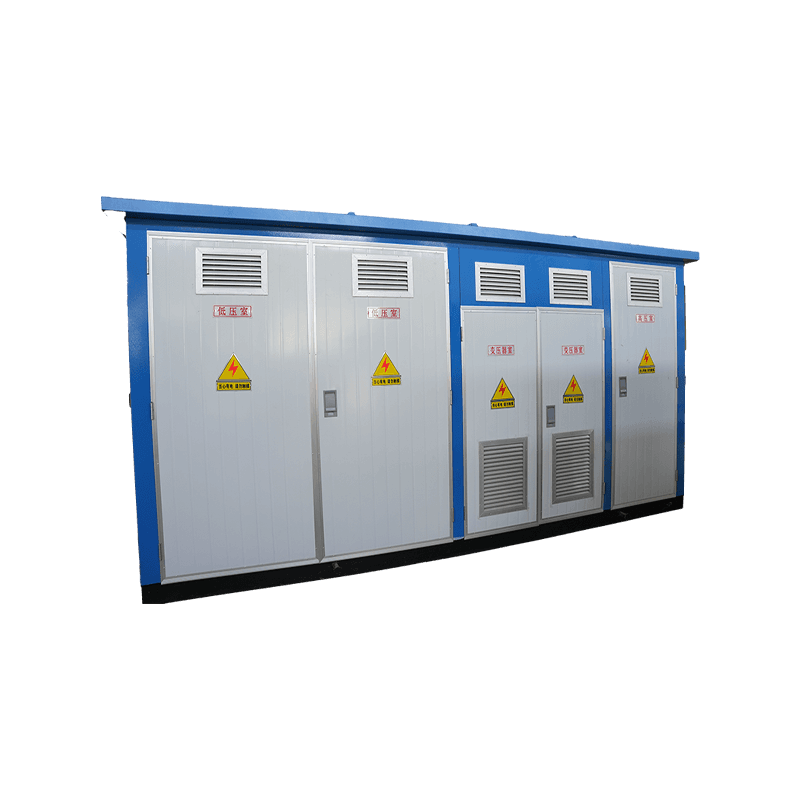
Product overview: YB-type high-voltage/low-voltage pre-installed substation is a compact complete set of power distribution equipment that integrates ...
See Details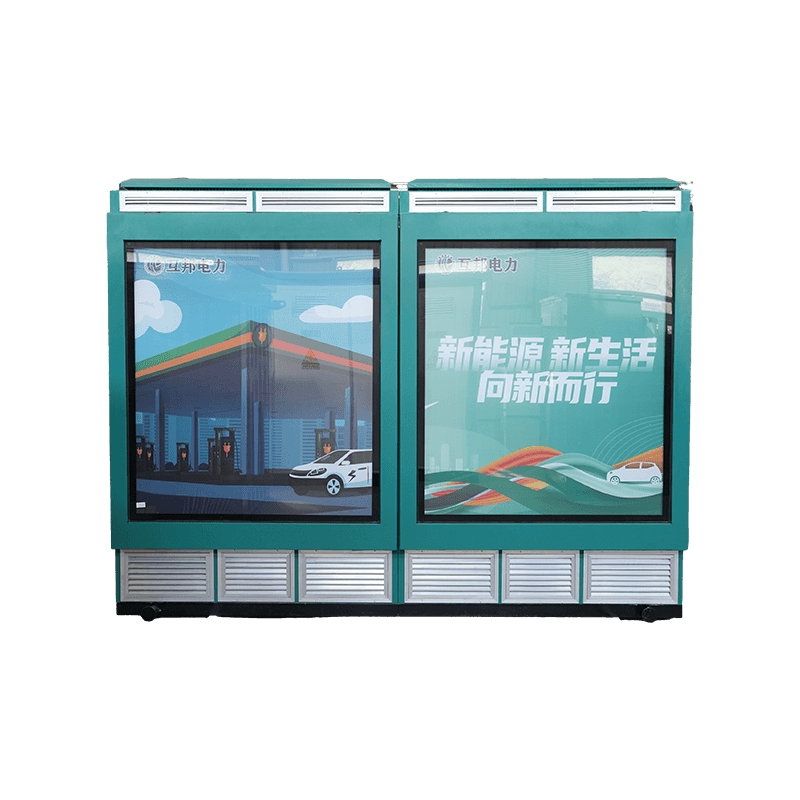
Product overview:Semi-buried box substation (barrel weight semi-buried box transformer) is a new generation of box-type transformer newly developed on...
See Details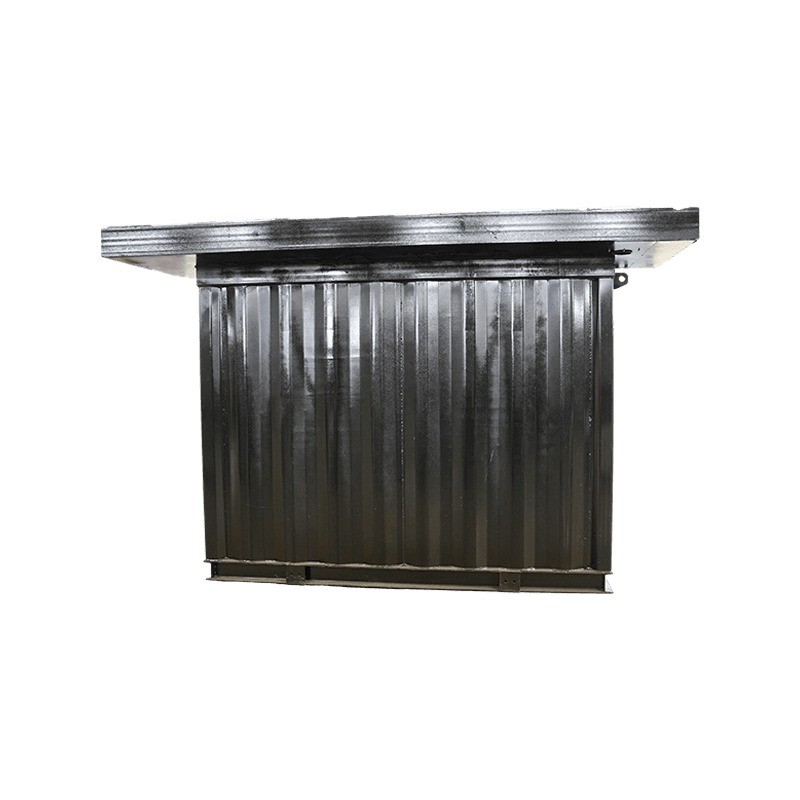
Product overview:All-buried box-type substation (referred to as all-buried box-type transformer) is a new generation of box-type transformer newly dev...
See Details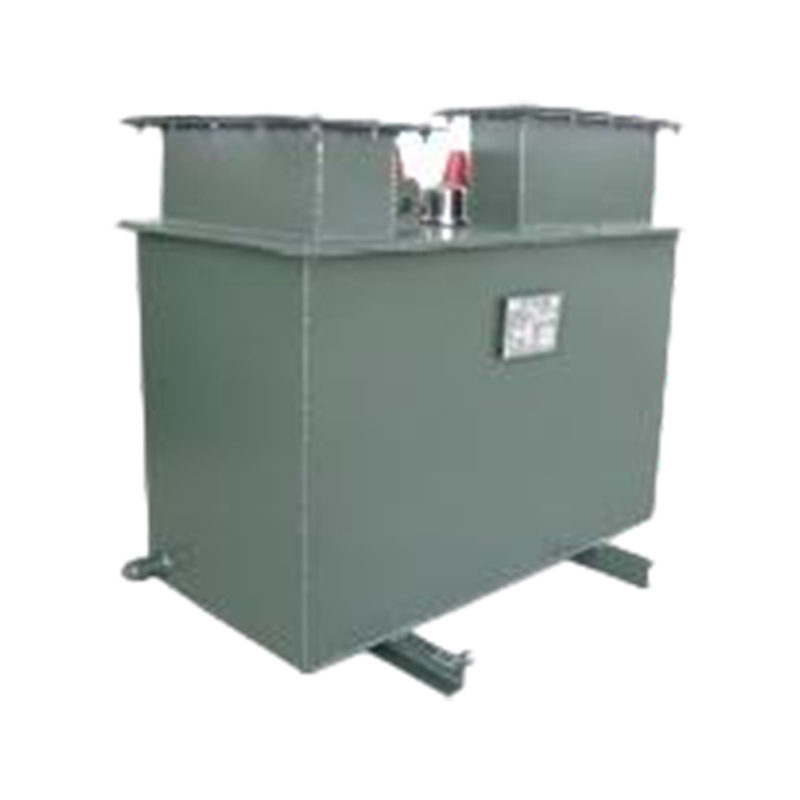
Product Overview: Underground transformer: a distribution transformer or combined transformer that can be installed in a pit. It is generally installe...
See Details
Product overview: Pipe corridor transformer is the abbreviation of "urban underground pipeline comprehensive corridor", that is, the construction of a...
See Details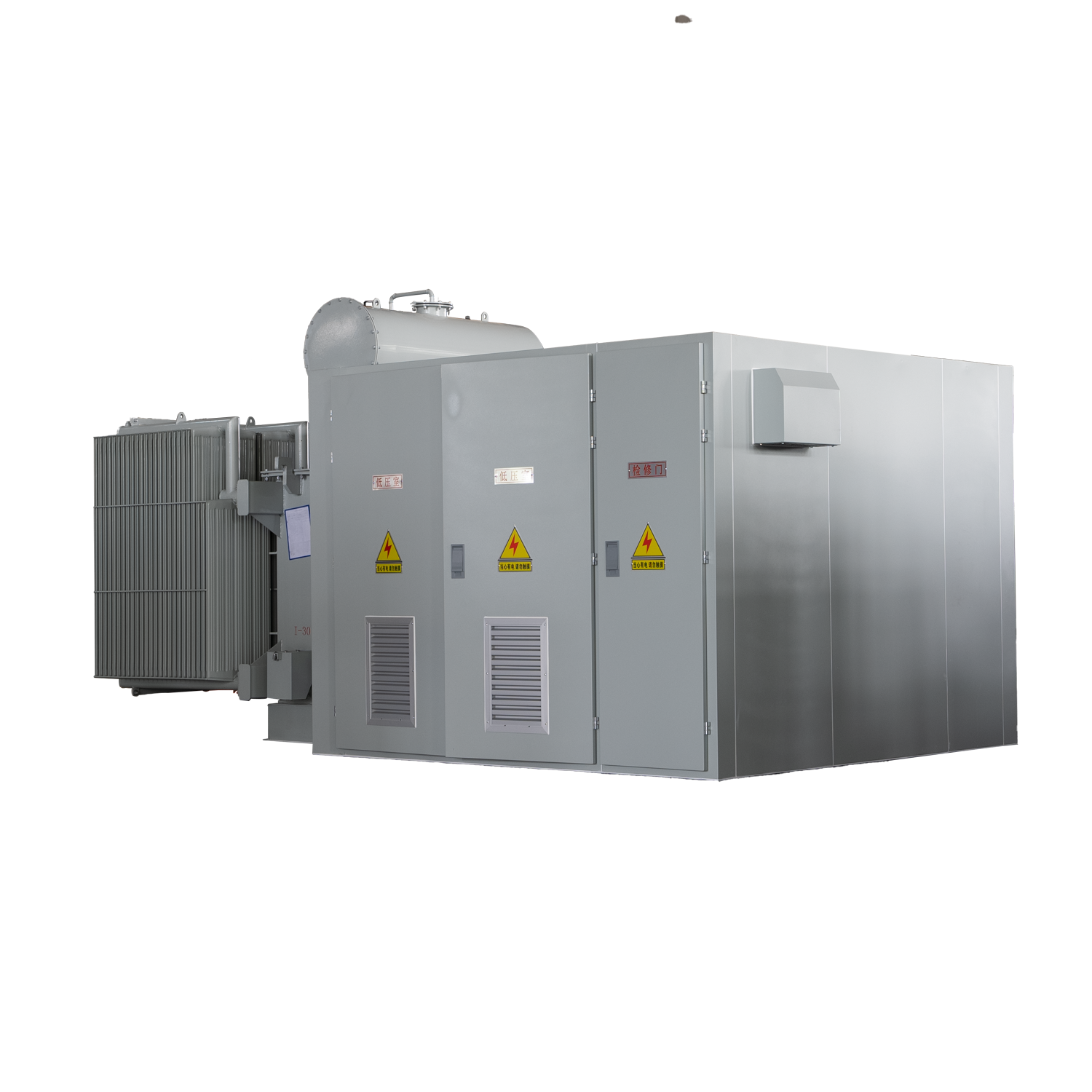
Product overview: Wind combined transformer series products for our company specially designed and developed for wind power generation products, wind ...
See DetailsRequest for a call today






Contact Us