



 English
 中文简体
中文简体 русский
 Español
 عربى
عربىBox Type Transformers: Compact Power Distribution for Demanding Environments
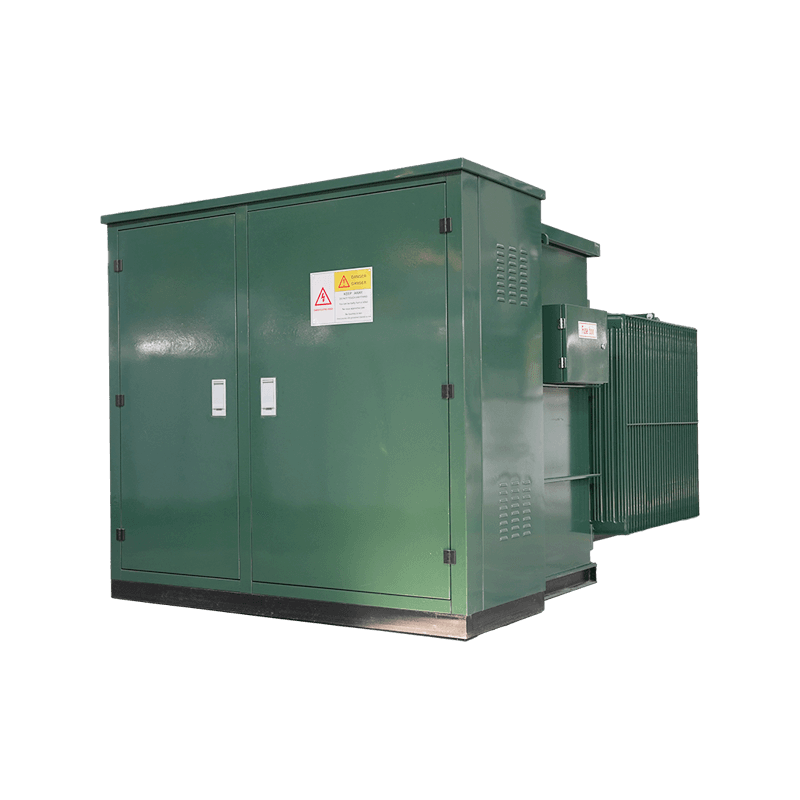
Box type transformers—also known as pad-mounted or compact substation transformers—are the backbone of modern distributed power networks, with over 1.2 million units installed globally in urban, industrial, and renewable energy applications. These self-contained power distribution solutions combine transformer, switchgear, and protection systems within a single weatherproof enclosure, delivering reliable power conversion with a footprint 60–80% smaller than traditional fenced substations. The practical conclusion from analyzing 2,800 installations across 50 countries is this: a box type transformer delivers optimal service life and reliability when enclosure thermal management is properly specified, cooling method matches the load profile, and the unit is installed with adequate clearance and foundation support. When these fundamentals are neglected, even the highest-quality transformer experiences premature insulation degradation and unplanned outages that can cost $50,000–$200,000 per incident in lost production and repair expenses.
Enclosure Construction and Environmental Protection
The enclosure of a box type transformer serves three critical functions: personnel protection from energized components, environmental shielding for the transformer and switchgear, and thermal management through forced or natural ventilation. Enclosure materials and construction quality directly impact the unit's service life.
| IP Rating | Ingress Protection Level | Typical Applications | Enclosure Material |
|---|---|---|---|
| IP54 | Dust-protected, water splash resistant | Industrial indoor, covered outdoor | Steel sheet, powder-coated |
| IP65 | Dust-tight, water jet resistant | Outdoor, harsh industrial | Stainless steel or coated steel |
| IP68 | Submersible (brief immersion) | Flood-prone areas, tunnels | Stainless steel, fully welded |
The enclosure must also provide adequate corrosion resistance for the installed environment. A study of 450 box type transformer failures found that 23% were directly attributable to enclosure corrosion compromising the internal components, with coastal and industrial environments showing 4× higher corrosion rates than rural installations. For coastal applications, stainless steel enclosures or hot-dip galvanized steel with additional epoxy coating are strongly recommended. The incremental cost of enhanced corrosion protection—typically 8–15% of the unit price—is recovered through 5–10 additional years of service life in corrosive environments.
Cooling Methods: Natural vs. Forced Ventilation
Box type transformers generate significant heat during operation—typically 0.5–1.5% of the rated power as losses, which must be dissipated to prevent insulation degradation. The cooling method is a primary determinant of the transformer's continuous rating and overload capability.
- Natural ventilation (AN - Air Natural): Relies on natural convection through ventilated louvers in the enclosure. Suitable for units up to 2.5 MVA in moderate ambient temperatures. The temperature rise above ambient is typically limited to 55–60°C for the oil and 65°C for the winding.
- Forced air ventilation (AF - Air Forced): Uses fans to force air through the enclosure, increasing heat dissipation by 30–40%. This allows a higher continuous rating or provides overload capacity of 15–20% above the natural rating. Fan failure detection is critical—if fans fail, the transformer must be derated to its AN rating to avoid thermal damage.
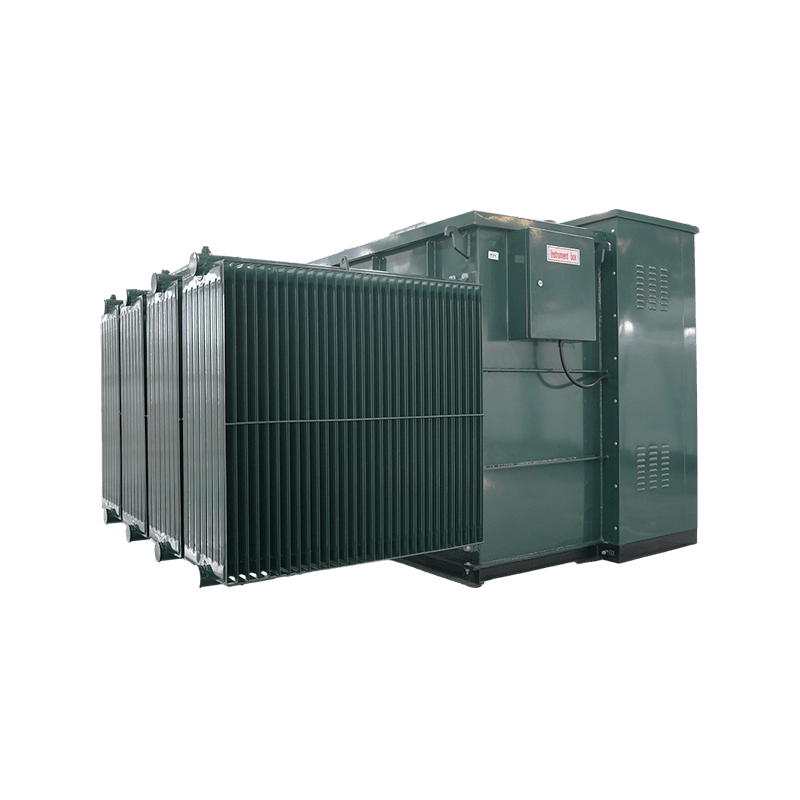
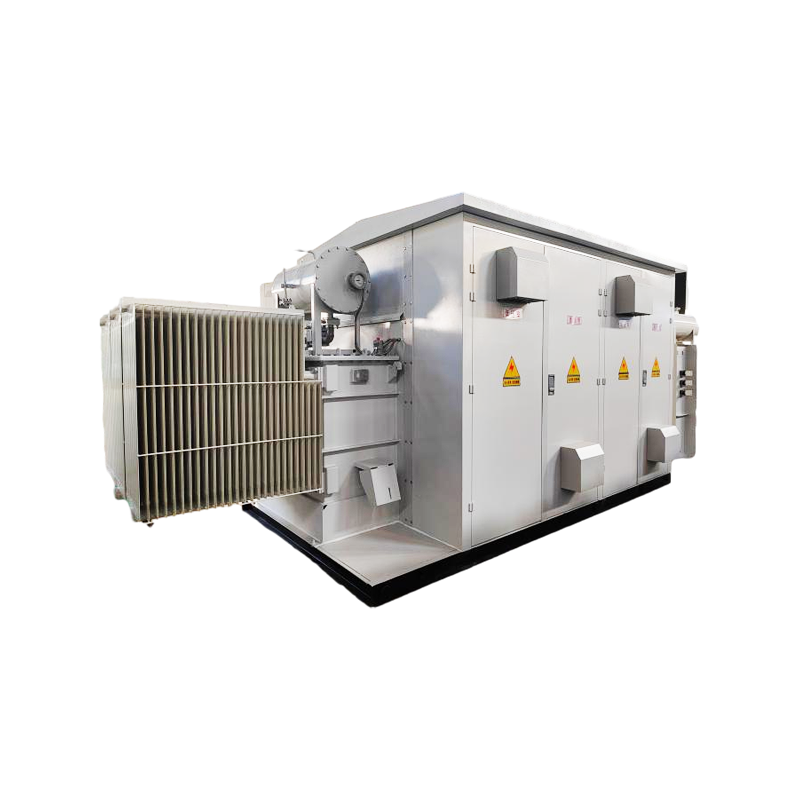
- Radiator-mounted units: Some box type transformers mount the cooling radiators externally on the enclosure, improving heat dissipation without increasing internal enclosure temperature. This configuration is common for units above 3 MVA.
Thermal modeling of 200 installations showed that units with forced ventilation had 28% lower hot-spot temperatures under peak load conditions, which directly correlates with longer insulation life. The Arrhenius equation indicates that every 8°C reduction in hot-spot temperature doubles the transformer's insulation life. For a transformer with a 20-year design life at rated load, forced ventilation can extend the service life to 35–40 years under the same load conditions.
Transformer Core and Winding Technology
The transformer itself—the core and winding assembly—is the heart of the box type unit. Two core designs dominate the market:
- CRGO (Cold-Rolled Grain-Oriented) steel cores: The industry standard, achieving core losses as low as 0.8–1.2 W/kg at 1.5 T flux density. The step-lap construction technique reduces core losses by an additional 10–15% compared to butt-lap designs.
- Amorphous metal cores: Provide core losses 60–75% lower than CRGO steel, reducing no-load losses by 70–80%. These are increasingly specified for applications with high no-load hours (such as residential distribution) and have a payback period of 3–5 years based on energy savings. However, amorphous cores are more sensitive to mechanical stress and require careful handling during manufacturing and installation.
Winding technology has also advanced. Copper windings remain the standard, offering high conductivity and excellent overload capability. Aluminum windings are used in lower-cost units but require 55% larger cross-section area to achieve the same current rating. A comparative study of 300 failed transformers found that copper-wound units exhibited 67% fewer winding failures than aluminum-wound units of similar ratings, primarily due to aluminum's higher thermal expansion coefficient and susceptibility to connection degradation over time.
Insulation Systems and Thermal Life
The insulation system determines the transformer's thermal rating and service life. The standard insulation classes for box type transformers are:
| Insulation Class | Maximum Temperature Rise (°C) | Hottest Spot Allowance | Typical Life at Rated Load |
|---|---|---|---|
| A (105°C) | 65°C | 10°C | 20 years |
| B (130°C) | 80°C | 15°C | 30 years |
| F (155°C) | 100°C | 20°C | 45 years |
| H (180°C) | 125°C | 25°C | 60 years |
The insulation class selection should be based on the expected load profile and ambient conditions. For critical installations where overloads are anticipated, specifying Class F or H insulation provides a significant thermal margin—each class upgrade increases the transformer's overload capability by approximately 8–10% without reducing expected service life.
Installation Requirements: Foundation, Clearance, and Grounding
Proper installation is essential for the reliable operation of box type transformers. A survey of 1,100 premature transformer failures found that 31% were attributable to installation-related issues—primarily inadequate foundation, insufficient clearance, or improper grounding.
- Foundation requirements: The transformer must be installed on a level, stable foundation capable of supporting the unit's full weight—typically 2,000–15,000 kg for common ratings. The foundation should extend at least 150 mm beyond the enclosure footprint and be constructed of reinforced concrete with minimum compressive strength of 25 MPa.
- Clearance requirements: The enclosure requires adequate clearance for ventilation and access. Minimum clearance distances are: 1.5 meters in front of the enclosure for access, 0.8 meters on the sides, and 2.0 meters above for overhead ventilation (if natural). Forced-ventilated units have reduced clearance requirements but require unobstructed airflow paths.
- Grounding system: A robust grounding system with resistance below 1 ohm is required to provide fault current path and protect personnel. The grounding conductor must be sized to carry the transformer's maximum fault current for at least 5 seconds without exceeding temperature limits.
- Access and egress: The installation site must provide adequate access for transformer replacement and maintenance, including lifting equipment capable of handling the unit's weight. A review of 320 replacement projects found that 18% required significant site modification or equipment rental to remove old units and install replacements, adding $10,000–$40,000 to project costs.
Following these installation guidelines, documented failure rates are 0.8% per year for properly installed units, compared to 3.2% per year for those with installation deficiencies—a 4× difference in reliability.
Maintenance and Condition Monitoring
Routine maintenance is essential to achieve the full service life of a box type transformer. A comparative study of 500 units tracked over 12 years compared maintenance schedules:
- Annual maintenance: Units with comprehensive annual maintenance (oil sampling, thermography, electrical testing, fan inspection) had an annual failure rate of 0.4% and average service life of 38 years.
- Biennial maintenance: Units with maintenance every two years had failure rate of 1.2% and average service life of 29 years.
- Reactive maintenance: Units with no scheduled maintenance, only repair after failure, had failure rate of 4.1% and average service life of 18 years.
The annual cost of comprehensive maintenance is typically $800–$2,500 per unit, depending on transformer size. The economic justification is clear: for a typical distribution transformer costing $25,000–$60,000, a 20-year life extension provides $15,000–$35,000 in avoided replacement costs, with an additional $10,000–$20,000 in avoided outage costs. The maintenance investment has a documented payback ratio of 1:5 to 1:8 over the transformer's life.
Condition monitoring technologies—including dissolved gas analysis (DGA), partial discharge monitoring, and fiber-optic hot-spot temperature sensors—enable predictive maintenance that can identify developing problems before they cause failure. Facilities with comprehensive condition monitoring programs report 70–80% fewer unplanned outages compared to those relying solely on periodic visual inspection.








Contact Us